How to Get Rid of Furniture in NYC: Legal, Easy & Eco-Friendly Options (Updated 2027)

Getting rid of an old couch or dresser in NYC takes more planning than simply carrying it outside. Collection schedules, narrow stairwells, and building rules can complicate the process, especially when a move-out deadline is approaching.
Fortunately, you have several options, from selling or donating usable pieces to recycling eligible materials, using free curbside collection, or hiring professional help. This guide explains how furniture disposal in NYC works so you can choose a practical option, prepare your items, and avoid common mistakes
Furniture Disposal in NYC: Compare Your Options
Start by checking the furniture’s condition and how much time you have before it needs to leave.
Option | Best suited to | Cost considerations | Timing and effort |
|---|---|---|---|
Sell | Usable furniture with resale value | Potential proceeds, minus applicable fees | Requires listing and coordinating pickup |
Donate | Clean furniture that meets acceptance requirements | Pickup fees vary | Requires approval and scheduling |
Give away | Usable furniture someone can collect | Often no charge | Requires arranging a handoff |
DSNY collection | Eligible residential bulk items | Free curbside collection | Requires carrying, preparation, and correct timing |
Professional removal | Heavy pieces, multiple items, or tight deadlines | Request a written estimate | Confirm availability and included services |
Donation and resale work best when you have time to coordinate. For broken or unusable furniture, check collection eligibility or arrange private removal.
How to Use Free NYC Bulk Pickup
DSNY offers free curbside collection of eligible large items from residential buildings. You must arrange to get the furniture from your apartment to the collection area.
1. Check Your Collection Schedule
Look up your address’s collection schedule before carrying anything outside. Metal and rigid plastic furniture belongs with recycling. Non-recyclable furniture belongs on your trash-only collection day, not your recycling day.
2. Sort and Prepare Your Furniture
Separate recyclable pieces from non-recyclable furniture. Take items apart when practical, keeping smaller components bundled securely.
Check special instructions for mattresses, glass, and oversized pieces before setting them out.
3. Follow Placement and Timing Rules
For standard bulk collection:
- Set out up to six items per collection day.
- Place items outside between 6 p.m. and midnight before the appropriate collection day.
- Keep pedestrian access clear.
- Do not place items in the street or in front of another property.
Standard bulk-item pickup appointments cannot be scheduled. If you have more than six items, spread them across collection days or arrange private removal.
How to Recycle Old Furniture in NYC
How to recycle old furniture depends on its materials. Curbside recycling accepts eligible metal and rigid plastic furniture, but wood, upholstery, and furniture glass require different handling.
Use this table to identify the appropriate route to get rid of old furniture:
Furniture material or item | Appropriate route |
|---|---|
Mostly metal furniture | Recycling collection |
Rigid plastic furniture | Recycling collection |
Wood, particleboard, or fiberboard furniture | Reuse when suitable, otherwise trash-only collection |
Upholstered couches and chairs | Reuse when suitable, otherwise trash-only collection |
Glass tabletops and mirrors | Trash with protective preparation |
Reuse and recycling are different. A wooden dresser may be unsuitable for curbside recycling but still useful to another household.
Glass furniture and mirrors cannot go into curbside recycling. Tape large glass items and double-bag broken glass to help protect the people handling them.
Where to Donate, Sell, or Give Away Furniture
If furniture is clean, functional, and free of pests, finding another user can keep it in service longer.
Donate Furniture That Meets Acceptance Requirements
To donate furniture in NYC contact a local nonprofit or reuse organization before transporting anything. Acceptance policies differ, and an organization may decline furniture because of its condition, dimensions, or available space.
Confirm these details first:
- Accepted furniture types and condition requirements
- Pickup coverage and available dates
- Pickup charges, if applicable
- Stair and elevator restrictions
- Photos or measurements needed for approval
Do not assume that furniture donation in NYC includes free pickup or carrying from your apartment. Have a backup plan if the organization declines the piece.
Sell Furniture Online
Craigslist and Facebook Marketplace can help connect you with buyers.
Include clear photos, accurate dimensions, damage disclosures, and your pickup deadline. Tell buyers about stairs, elevator reservations, or disassembly requirements before agreeing to a collection time.
A realistic price and complete description can reduce unnecessary messages and failed pickups.
Arrange a Giveaway
Offer usable pieces through neighborhood groups or directly to someone who needs them. Confirm who will carry the item and when they will arrive.
Leaving furniture outside with a “free” sign still requires compliance with applicable placement and set-out rules. An arranged handoff gives you more control over when the item leaves.
How to Dispose of Couches, Mattresses, and Other Large Pieces
Sometimes disposal of furniture requires additional preparation before collection.
Couches and Sleeper Sofas
For couch disposal in NYC, place upholstered couches out for bulk collection on the night before your trash-only collection day. For sleeper sofas, remove the metal frame and set it out separately with recycling.
Before carrying the couch outside, measure doorways, stairwells, and elevator openings. Removing detachable legs or separating modular sections can make tight spaces easier to navigate.
Mattresses and Box Springs
For mattress disposal in NYC, seal each mattress and box spring in a plastic bag before placing it at the curb on the night before your trash-only collection day. Secure the bag completely to help prevent the spread of bed bugs. Unwrapped items may be left uncollected and can result in a fine.
Oversized or Infested Furniture
Oversized furniture disposal in NYC may require disassembly or a private removal service if the item cannot fit into a standard collection truck. Before beginning the removal of large furniture, check dimensions and arrange any necessary help before carrying it outside.
If furniture has bed bugs, attach a clearly visible sign identifying the infestation. Do not donate, sell, or give away infested pieces.
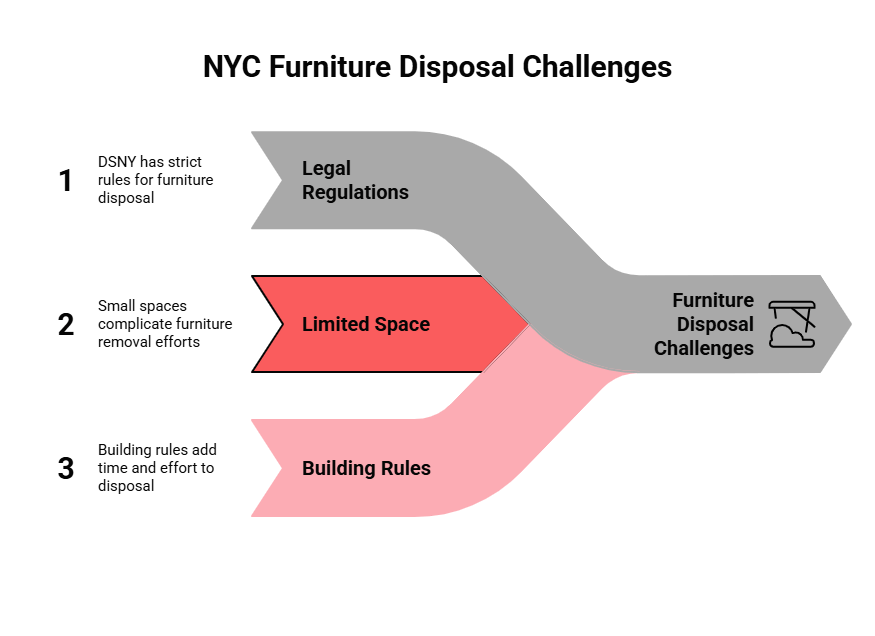
Why NYC Furniture Disposal Isn’t As Simple as It Sounds
Choosing a disposal method is only part of the process. You also need to coordinate carrying, building access, and the date the furniture must leave.
Collection Days Can Conflict With Move-Out Deadlines
Your lease may end before the next eligible collection day. A replacement sofa might also arrive before you can legally set the old one outside.
Check dates early. If the schedules do not align, consider an arranged giveaway, an approved temporary holding location, or private removal.
Tight Stairwells and Small Elevators Complicate Carrying
Getting a sleeper sofa down a fifth-floor walk-up takes planning. A piece that fits inside the apartment may need disassembly to pass through a doorway or stairwell.
Before removal:
- Measure furniture and access routes.
- Check which components can be removed.
- Arrange sufficient carrying assistance.
- Protect walls, floors, and shared spaces.
Free curbside collection does not solve the challenge of moving heavy furniture downstairs.
Buildings Have Their Own Requirements
Ask management about removal hours, freight elevator reservations, loading access, and restrictions on common areas.
Hired providers may need a certificate of insurance (COI) before entering the building. Confirm the required documentation and allow time to submit it.
Donation or Resale Pickups Can Fall Through
A charity may decline furniture after reviewing its condition. A buyer may arrive without enough help or cancel at the last minute.
Confirm measurements, carrying responsibilities, and timing in advance. Keep an alternative available when your move-out date is firm.
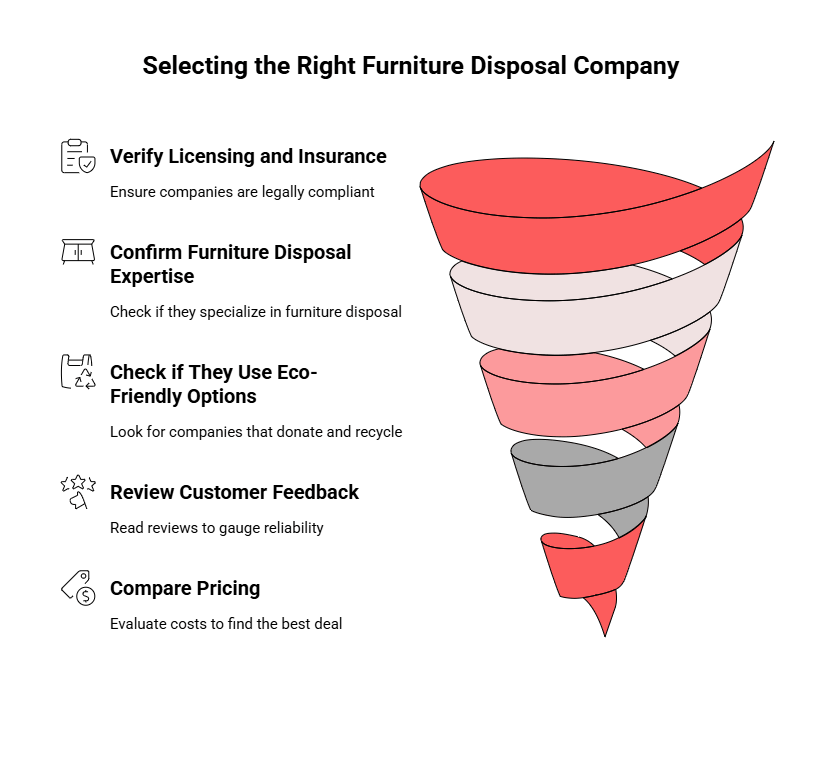
When to Hire a Mover or Furniture Removal Company
Professional help may make sense for heavy furniture, multiple pieces, limited carrying assistance, or a deadline that does not match collection schedules.
A mover may suit a relocation that includes unwanted furniture. A standalone removal provider may suit a cleanout without a move.
Before booking, ask:
Do you handle this specific furniture and removal arrangement?
What credentials and insurance apply to the work?
Does the estimate include stairs, disassembly, carrying, and disposal?
Can usable items be donated, and under what conditions?
What pickup window is confirmed?
Request a written estimate based on the actual inventory and access conditions. Ask how added items or changes could affect the price.
Frequently Asked Questions
Can wood furniture be recycled in NYC?
Wood furniture cannot go into NYC’s curbside furniture recycling stream. Consider donation, resale, or repair before using trash-only bulk collection.
Is furniture donation pickup always free?
No, pickup availability and fees depend on the organization. Confirm acceptance, charges, and carrying arrangements before relying on a pickup.
Should you hire movers or a junk-removal company?
Movers may be suitable when unwanted furniture needs to leave during a relocation. A junk-removal company may be suitable for a standalone cleanout, provided it handles your items and building requirements.
How does furniture disposal in Brooklyn work?
Furniture disposal in Brooklyn follows NYC’s residential bulk-collection rules, with the correct collection day determined by your address and the item’s material. You can also sell, donate, or give away usable furniture, or arrange professional removal.
How can I get rid of a couch in NYC?
To get rid of a couch, arrange a sale, donation, or giveaway if it is usable, or prepare it for residential bulk collection. For curbside disposal, place upholstered couches out before your trash-only collection day and separate sleeper-sofa metal frames for recycling.
Is NYC furniture removal free?
NYC offers free residential curbside collection for eligible furniture, but you must arrange to carry it outside and follow collection rules. Donation organizations or giveaway recipients may collect usable pieces at no charge, depending on availability and acceptance requirements.
Where can I get rid of old furniture?
You can offer usable furniture through resale platforms, neighborhood giveaway groups, or donation organizations that accept it. For unusable pieces, use eligible residential curbside collection or hire a removal provider.
How do I dispose of furniture responsibly?
Start by checking if the furniture can be reused through donation, resale, or gifting. If disposal is necessary, separate eligible recyclables, follow collection and preparation rules, or confirm how a professional provider will handle the items.
Need Help Removing Furniture Before Your Move?
Moving out and leaving bulky furniture behind? Imperial Movers can help move what you’re keeping and coordinate removal of what you no longer need. Our experienced NYC movers help manage the heavy lifting, tight stairwells, and building requirements.
Our team offers:
- Full-service support: Packing, disassembly, carrying, and transportation tailored to your move.
- Licensed and insured professionals: Help coordinating building access and required insurance documentation.
- Furniture-removal planning: Discuss available donation or reuse arrangements for suitable pieces.
- Flexible scheduling: Ask about last-minute and weekend availability.
- Clear, upfront pricing: Get a customized estimate based on your inventory, access conditions, and requested services.
Ready to clear the space? Request a customized quote and let Imperial Movers help plan your next move.